Study Questions without Answers
- You must carefully look for bicycles in traffic lanes because they:
- Must ride facing oncoming traffic.
- Could be hidden in your blind spots.
- Usually have the right-of-way.
- There are five vehicles following closely behind you on a road with one lane in your direction. When you see this white sign, you should:
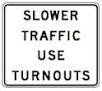
- Drive to the right edge of your lane but keep moving.
- Slow down and signal the other drivers to pass you.
- Drive to the side of the road and stop in the designated area.
- To see cars in bling spots, you should:
- Look in the inside rearview mirror.
- Look in the outside rearview mirror.
- Turn your head.
- Whose responsibility is it to know how your medications affect your driving?
- Your doctor's.
- Your pharmacist's.
- Yours.
- If there is a deep puddle in the road ahead, you should:
- Maintain the posted speed and drive through the water.
- Steer your vehicle around the water if possible.
- Shift into neutral as you drive through the water.
- You are driving in the far right lane of a multilane freeway. A line of five cars is merging into your lane ahead from an on-ramp. You:
- Must maintain your speed and position.
- Must slow down to let the other vehicles merge.
- Should make room for the merging vehicles if possible.
- When you enter traffic from a full stop (e.g. pulling away from the curb), you:
- Should drive slower than other traffic for 200 feet.
- Need a large enough gap to get up to the speed of traffic.
- Should wait for the first vehicle to pass, then pull into the lane.
- When looking ahead while driving, you should:
- Stare at the middle of the road.
- Look directly in front of your car.
- Scan from side to side.
- It is illegal to leave a child six years of age or younger unattended in a motor vehicle:
- When the keys are in the ignition.
- If the child is with a 12 year old brother or sister.
- On a cold, rainy day, and all of the windows are closed.
- The driver ahead of you stops at a crosswalk. What should you do?
- Passed any vehicle once the pedestrian has passed your lane.
- Stop, then proceed when all pedestrians have crossed.
- Change lanes, look carefully, and pass the stopped vehicle.
- Give extra space to drivers backing out of a parking space because:
- They may not see you.
- They have the right-of-way.
- It is required by law.
- You were in a collision that caused more than $750 worth of damage. You must report the collision within 10 days to:
- The DMV
- The CHP
- Your insurance company.
- You have consented to take a test for the alcohol content of your blood, breath, or urine:
- Only if you have been drinking alcohol.
- Whenever you drive in California.
- Only if an accident occurred.
- Who has the right-of-way at an intersection with no crosswalks:
- Pedestrians always have the right-of-way.
- Vehicles, but they should slow down and be careful.
- Pedestrians, but only with a green "walk" signal.
- Solid yellow lines separate:
- Traffic lanes on one-way streets.
- Bicycle lanes from regular traffic.
- Vehicles going in opposite directions.
- When you are driving in the far right lane on a freeway, you:
- Should expect merging vehicles at on-ramps.
- Must be driving slower than other traffic.
- Must give the right-of-way to merging traffic.
- You are approaching an uncontrolled intersection. You:
- Must always stop before driving through the intersection.
- Must yield the right-of-way to all other vehicles.
- Should slow down and be ready to stop.
- If you want to pass a bicyclist in a narrow traffic lane when an oncoming car is approaching:
- Honk your horn, then pass the bicyclist.
- Slow down and let the car pass, then pass the bicyclist.
- Wait until the bicyclist rides off of the roadway.
- To be sure a lane is clear before you change lanes, you should:
- Look in your outside mirrors only.
- Look over your shoulder into the lane that you want to enter.
- Always turn your head and look over your right shoulder.
- Allow extra space in front of your vehicle when you are following a:
- Passenger car.
- Station wagon.
- Large tour bus.
- This red and white sign means:
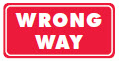
- The road ahead is closed to traffic in your direction.
- Do not enter the road unless it is safe to do so.
- The road ahead is closed to traffic in all directions.
- If you have a collision, the law requires you to exchange your driver license information with:
- Witnesses.
- Others involved in the collision.
- Security guards.
- Smoking inside a vehicle when a person that is younger than 18 years of age is present is:
- Legal, if it is your child.
- Illegal at all times.
- Not restricted by law.
- For which of the following traffic lights must you always stop your vehicle?
- Solid red lights, flashing red lights, and blacked-out traffic signals.
- Solid red lights, red arrows, and flashing yellow lights.
- Solid red lights, flashing red lights, and yellow lights.
- To turn right from a highway with two lanes in your direction, turn from:
- The lane closest to the center of the road.
- The lane nearest the curb or edge of the roadway.
- Either lane, depending on oncoming traffic.
- If you are driving 55mph on a two-lane highway, one lane in each direction,and want to pass the car ahead of you. To pass safely, you need to:
- Wait until solid double yellow lines separate the lanes.
- Increase your speed to 65mph.
- Have at least a 10 to 12 second gap in the oncoming traffic.
- Which of these statements is true about road construction zones?
- Fines are the same for violations committed in construction zones.
- Slow down for the safety of you and the construction workers.
- Slow down only if you think workers are present.
- You are crossing an intersection and an emergency vehicle is approaching with a siren and flashing lights. You should:
- Stop immediately in the intersection until it passes.
- Pull to the right in the intersection and stop.
- Continue through the intersection, pull to the right and stop.
- You are on a road with only one lane in each direction and you want to pass another vehicle, but there is a curve ahead which blocks your view. YOu must:
- Not pass the other vehicle.
- Pass on the shoulder of the road.
- Signal longer than 5 seconds to pass safely.
- You may drive in a bike lane:
- If you drive slower than 15mph.
- No more than 200 feet before making a right turn.
- Whenever bicyclists are not present.
- You are driving 45 mph in a 55 mph zone. You can be cited for speeding:
- Only if you are approaching a sharp curve in the road.
- Under no circumstances because it is always legal.
- If it is unsafe for current weather conditions.
- A peace officer stops you because he suspects you are DUI. You refuse to take a chemical test. What happens now?
- Your driving privilege may be taken away.
- You will receive an additional fine.
- You will not be allowed to post bail.
- Large trucks turning right onto a street with two lanes in each direction:
- May complete their turn in either the left or right lane.
- Often have to use part of the left lane to complete their turn.
- Must stay in the right lane at all times.
- You are driving on a one-way street. You may turn left onto another one-way street:
- Only if a sign permits the turn.
- If the traffic on the street is moving to the right.
- If traffic on the street is moving to the left.
- Before getting out of your car on the traffic side of the street, you should:
- Give an arm signal that you are exiting your vehicle.
- Turn on your left turn signal.
- Check traffic approaching from behind.
- This white sign means:

- You should slow down and move to the right lane.
- Stay in the right lane if you are moving slower than the other traffic.
- Slower traffic must exit to the right.
- Two vehicles are approaching an uncontrolled "T" intersection. One vehicle is on the through road and the other is on the road that ends. Who has the right-of-way at the intersection?
- The vehicle on the through road.
- The vehicle on the right.
- The vehicle that arrives first.
- You must notify DMV within 5 days if you:
- Sell or transfer your vehicle.
- Paint your vehicle a different color.
- Are cited for a traffic violation.
- Before driving into an intersection from a stop, you should look:
- Left and right only.
- Straight ahead and to the left.
- Left, right, and left again.
- A flashing red traffic light at an intersection means:
- Slow down before entering.
- Stop before entering.
- Stop and wait for a green light.
- You may legally park your car:
- At the corner in an intersection.
- Across a sidewalk if you are partially in a driveway.
- In a bicycle lane if there is no sign forbidding it.
- You are going to make a left turn in a dedicated left-turn lane when a yellow arrow appears for your lane, you should:
- Speed up and get through the intersection.
- Stop and not turn under any circumstances.
- Be prepared to obey the next signal that appears.
- You should not start across an intersection if you know you will block the intersection when the light turns red:
- Under any circumstances.
- Unless you entered the intersection on a yellow light.
- Unless you entered the intersection on a green light.
- You should use your horn when:
- Another vehicle is in your way.
- It may help prevent a collision.
- Another driver makes a mistake.
- You are driving on a city street and see an emergency vehicle with flashing lights behind you. What should you do?
- Drive to the right edge of the road and slow down.
- Drive to the right edge of the road and stop.
- Stay in your lane, slow down, and let it pass.
- A law enforcement officer notices that one of your passengers is not wearing a seat belt and writes a citation. Which of the following is true?
- Both you and your passenger receive a citation.
- Your passenger will receive a citation regardless of age.
- You may receive a citation if your passenger is younger than 16.
- You see a car approaching from the rear. When you check your mirror again to change lanes, you no longer see the car. You should:
- Look over your shoulder to be sure the car is not in your blind spot.
- Turn on your signal and change lanes slowly.
- Signal, honk your horn, and change lanes quickly.
- An orange and red sign of this shape always means:

- This vehicle has the right-of-way.
- Slow-moving vehicle.
- Emergency vehicle ahead.
- You have had your license for eight months. You may:
- Drive between 5am and 11pm unaccompanied.
- Transport minors unaccompanied at any time.
- Transport minors between 11pm and 5am unaccompanied
- This yellow sign means:

- Railroad crossing is controlled-continue at your regular speed.
- You are approaching a railroad crossing.
- Stop at the railroad tracks and wait for a signal before crossing.
- The speed limit for a school zone is_____. Unless posted otherwise.
- 15 mph
- 25 mph
- 20 mph
- You have had your license for 3 months, you may:
- Drive between 5am and 5pm unsupervised.
- Transport minors unaccompanied anytime.
- Transport minors between 11pm and 5am unaccompanied.
- A green arrow pointing to the left on a traffic light means you may:
- Make a protected turn in that direction.
- Turn left or continue going straight.
- Turn in that direction only after you stop.
- When you change lanes, or merge with another lane, you:
- Have the right of way
- Should first stop and check for cross traffic.
- Need at least a four second gap in traffic.
- This yellow sign means:

- Detour ahead.
- Right turn permitted on green arrow only.
- Sharp turn to the right.
- This yellow sign means:

- Less space between lanes ahead.
- The highway will be divided ahead.
- The right lane will end ahead.
- When merging onto a freeway, you should be driving:
- At or near the same speed as the freeway traffic.
- At the legal freeway speed limit.
- Slower than the freeway traffic.
- It is legal for a person under 21 years of age to drive with a blood alcohol concentration (BAC) that is _______ or more.
- 0.08% - Eight hundredths of one percent
- 0.01% - One hundredth of one percent
- 0.05% - Five hundredths of one percent
- When driving in fog use your:
- Low-beam headlights
- High-beam headlights
- Running lights
- Your wheels should be pointed straight ahead, Unless you are:
- Waiting to make a left turn at a traffic light.
- Parked on a hill or sloping driveway.
- Parked on the side of a level roadway and there is no curb.
- You are towing another vehicle or a trailer on a freeway with four lanes in your direction, you may travel in:
- Any of the traffic lanes in your direction.
- Either of the two right lanes.
- The far right lane only.
- To turn left from a one-way street onto a one-way street, start from:
- The far left lane.
- The center lane.
- Any lane as long as it seems safe to do so.
- This yellow sign means:

- Medical services ahead.
- There is a "T" intersection ahead.
- Another road crosses yours ahead.
- You are exiting a freeway on a ramp that curves downhill. YOu should:
- Slow to a safe speed before the curve.
- Slow to the posted speed limit for the freeway.
- Wait until you have entered the curve to begin braking.
- Tailgating other drivers (driving too close to their rear bumper):
- Can frustrate other drivers and may make them angry.
- Can result in a traffic citation.
- Reduces accidents by preventing you from being "cut off".
- Generally speaking, you are in a large truck's blind spot if you:
- Drive close to the large truck's left front wheel.
- Cannot see the truck driver in the truck's side mirrors.
- Follow no closer than 10 feet behind the large truck.
- Check your rearview mirrors:
- Often to see how traffic is moving behind you.
- Only on a freeway or highway.
- Only when you are slowing down.
- At intersections, crosswalks, and railroad crossings, you should always:
- Stop, listen, and proceed if you cannot hear anything.
- Look to the sides of your vehicle.
- Concentrate on oncoming traffic.
- A person between 13 and 18 years of age may have his/her driving privilege _____ for one year if convicted as a habitual truant.
- Extended
- Cancelled
- Suspended
- A traffic light is red, but a peace officer is signaling you to continue driving. What should you do?
- Change lanes and drive slowly.
- Wait for the green light.
- Do as the officer tells you.
- You are at a red traffic signal. The traffic light turns green, but there are still other vehicles in the intersection. You should:
- Wait until the vehicles clear the intersection before entering.
- Move ahead only if you can go around the other vehicles safely.
- Enter the intersection and wait for traffic to clear.
- If the roadway is wet and your car starts to skid, you should:
- Slowly ease your foot off of the gas pedal.
- Slow down by shifting into a lower gear.
- Slow down by pumping the brakes quickly and firmly.
- Which of the following is true about safety belts and collisions?
- They are unnecessary for vehicles equipped with front and side air bags.
- They keep you from being thrown clear to safety, which lowers your chances of surviving a collision.
- They increase your chances of survival in most types of collisions.
- Which of these statements are true about child passengers?
- Children one or older and over 20 pounds should ride in the front seat.
- Children under age one should not ride in the front seat in air bag equipped vehicles.
- The front seat is generally safest for children six years of age and older.
- When roads are slippery you should:
- Avoid making fast turns and fast stops.
- Pump your brakes to test the traction of your tires.
- Decrease the distance that you look ahead of your vehicle.
- Dim your light for an oncoming vehicles or when you are within 300 feet of a vehicle:
- You are approaching from behind.
- Approaching you from behind.
- You have already passed.
- You should always turn on your emergency flashers when:
- You are double parked in a traffic lane.
- You are parked on the side of the road in heavy fog.
- Your car has broken down on the roadway.
- Which way to you turn your wheels when parked uphill next to a curb?
- Parallel to the curb.
- Away from the curb.
- Toward the curb.
- When traffic is slow and heavy and you must cross railroad tracks before reaching the upcoming intersection, you should:
- Stop between the crossing gates in case they close.
- Stop on the tracks and wait for your light to turn green.
- Wait until you can completely cross the tracks before you proceed.
- You are on a two-way road and the vehicle ahead of you is turning left into a driveway. You may legally pass the vehicle on the right:
- If there is enough road between the vehicle and the curb to do so.
- Even if you must drive on the shoulder to do so.
- Even if you must cross a solid white line painted on the road.
- You must use your seatbelt:
- Unless you are riding in a vehicle built before 1978.
- Unless you are riding in a limousine.
- And failure to do so may result in a traffic ticket.
- If your driving record shows that you failed to appear in court after receiving a traffic ticket, DMV may:
- Suspend the registration of the vehicle you are driving.
- Suspend your driving privilege until you appear in court.
- Restrict your driving privilege.
- When changing lanes on a freeway, you should:
- Signal for at least 5 seconds prior to changing lanes.
- Cross several lanes at a time to avoid slow downs.
- Avoid driving over broken white lines and lane markings.
- If you have trouble seeing other vehicles because of dust or smoke blowing across the roadway, you should drive slower and turn on your:
- Headlights.
- Parking lights.
- Emergency flashers.
- Parking is NEVER permitted:
- In a crosshatched (diagonal) pattern space.
- Twenty feet from a railroad track.
- In a bicycle lane, unless otherwise posted.
- You are driving on a road where the speed limit is 45mph. All the other vehicles are driving 50mph or faster. You may legally drive:
- 50mph or faster, the speed of traffic.
- Anywhere between 45mph and 50mph.
- No faster than 45mph.
- This yellow sign means:

- One-way road widens into two lanes ahead.
- Vehicles on this road travel in two different directions.
- There is a divided road ahead.
- The California Driver Handbook recommends several tips to help you keep alert on long drives. One of these tips is:
- Pull off the road and rest.
- Turn on your air conditioner.
- Alternately drive close to the left and right sides of your lane.
- U-turns in residential districts are legal:
- On a one-way street at a green arrow.
- When there are no vehicles approaching nearby.
- Across two sets of double yellow lines.
- What is the difference between traffic lights with red arrows and those with solid red lights?
- Red arrows are only used to stop traffic that is turning left.
- Red arrows are only used for protected turn lanes.
- You can never turn against a red arrow, even if you stop first.
- During the first 12 months after you are licensed, you must be accompanied by your parent or guardian if you:
- Drive between the hours of 5am and 11pm.
- Transport minors between the hours of 11pm and 5am.
- Transport adults between the hours of 5am and midnight.
- If you are unable to see the road ahead while driving because of heavy rain or fog, and you wipers do not help, you should:
- Slow down and continue driving.
- Turn on your high beams and continue driving.
- Pull off of the road completely until visibility improves.
- This yellow sign means:

- One-lane road ahead.
- Merging lane ahead.
- Lane ends ahead.
- If a driver is going to pull out in front of you, the safest thing to do is:
- Honk your horn and maintain your speed.
- Slow or stop your car and use your horn.
- Use your horn and swerve into the next lane.
- If a pedestrian is in a crosswalk in the middle of a block:
- The pedestrian has the right-of-way.
- The pedestrian must yield the right-of-way.
- Vehicle have the right-of-way, but drivers must legally take care for the pedestrian's safety.
- This yellow sign means:

- The road ahead has many curves.
- There is a sharp curve in the road ahead.
- The road ahead is slippery.
- You may turn right on a solid red light:
- Only after slowing down and checking traffic.
- Only after stopping, and yielding to pedestrians, and bicyclists, unless otherwise posted.
- Under no circumstances.
- You are driving in the far right lane of a four-lane freeway and notice thick broken white lines on the left side of your lane. You are driving in:
- The carpool lane and must merge into the next lane.
- A special lane for slow moving vehicles.
- An exit lane.
- This yellow sign means:

- Narrow pedestrian bridge ahead.
- Pedestrians must yield the right-of-way ahead.
- There is a pedestrian crosswalk ahead.
- When a school bus with its red lights flashing is stopped ahead on your side of the road, you must:
- Stop until you think that the children are unloaded.
- Stop until the lights stop flashing.
- Change lanes, drive slowly, and pass carefully.
- Which of these is a legal U-turn?
- On a highway where there is an opening for a turn.
- 150 feet from a hill or curve.
- Over two sets of double yellow lines in the roadway.
- You should stop before crossing railroad tracks:
- Whenever a crossing is not controlled by gates.
- Any time a train may be approaching whether you can see it or not.
- If your vehicle has three or more axles.
- You must yield to a pedestrian using a white cane or a guide dog:
- Only when the guide dog is leading a person across the street.
- At all times.
- Only if a crossing guard is present.
- If you have a green light, but traffic is blocking the intersection:
- Stay out of the intersection until traffic clears.
- Enter the intersection and wait until traffic clears.
- Merge into another lane and try to go around the traffic.
- When you see this red sign, you should stop and:

- Check for vehicles in the direction you plan on going, then proceed.
- Let all vehicles that arrive before or after you go first.
- Check traffic in all directions before proceeding.
- Backing your vehicle is:
- Always dangerous to do.
- Dangerous if you have a helper.
- Only dangerous in large vehicles.
- Driving faster than traffic and continually passing other cars:
- Increases fuel efficiency.
- Increases your chances of an accident.
- Helps prevent traffic congestion.
- If you approach a curve or the top of a hill and you do not have a clear view of the road ahead, you should:
- Pull over and wait for conditions to improve.
- Use your high beam lights to be more visible.
- Slow down so you can stop if necessary.
- This red sign means that you should:
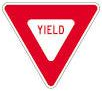
- Stop and check traffic both ways before proceeding.
- Give the right of way to traffic on the road that you are entering or crossing.
- Keep a steady speed and check traffic both ways.
- You may legally drive in any carpool lane if:
- Other lanes are stopped with heavy traffic.
- You are carrying the minimum number of persons shown on the sign.
- It is between the hours of 7pm and 7am.
- A red arrow pointing to the right on a traffic light means you may:
- Turn in that direction after slowing and checking traffic.
- Not turn in that direction until the light turns green.
- Turn in that direction after you have come to a complete stop.
- If you are a minor and your cell phone rings while you are driving, you should:
- Answer it if you have a hands free device.
- Let the call go to voice mail.
- Answer it if the call is from your parents.
- You should allow more space in front of your vehicle when following a large truck because:
- You need the extra room to see around the truck.
- Their heavier weight allows them to stop more quickly than you.
- If you follow too closely, you will get caught in the truck's wind draft.
- Highways are typically most slippery:
- During a heavy rainstorm in the middle of summer.
- When it first starts to rain after a dry spell.
- After it has been raining a long time.
- You can be fined up to $1,000 and jailed for six months if you are cited for:
- Dumping or abandoning an animal on a highway.
- Making a U-turn from a center left-turn lane.
- Parking in a bicycle lane.
- You are driving at night on a dimly lit street and using high beams. You should dim your lights when you are within 500 feet of:
- A vehicle approaching you from behind.
- An oncoming vehicle.
- A sharp curve or hill.
- Other drivers are not making room for you to merge onto a freeway with heavy traffic. If necessary, you may:
- Drive on the freeway shoulder until a gap appears.
- Stop before merging with freeway traffic.
- Make room by forcing your way into a small gap.
- If you drive slower than the flow of traffic, you will most likely:
- Interfere with traffic and receive a ticket.
- Improve traffic flow.
- Demonstrate defensive driving techniques.
- This white sign means:

- Drive to the right.
- Right turn yield.
- Slower traffic should move to the right.
- If you want to turn left ahead. In the middle of the road there is a lane marked as shown, you must:
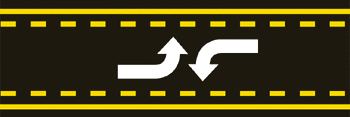
- Turn from your current traffic lane after signaling.
- Merge completely into this traffic lane before making your left turn.
- Not enter this lane for any reason.
- If you are convicted by the court of a first DUI:
- Your driving privilege will be revoked for one year.
- You will be sentenced to a mandatory 30 days in jail.
- Your vehicle will be confiscated and sold.
- You must make a written report of a traffic accident occurring in California (SR 1) to DMV when:
- Your vehicle fails a smog test.
- You are involved in a collision and there is an injury.
- You change your insurance company.
- Following closely behind another vehicle (tailgating):
- Increases fuel efficiency.
- Is a common cause for rear-end collisions.
- Helps keep traffic moving.
- Which of these is recommended when driving at night on a dimly lit street:
- Drive slowly enough to stop within the area lighted by your headlights.
- Briefly look at oncoming headlights so you won't be blinded.
- Keep instrument lights bright to be more visible by other drivers.
- The "Three-second rule" applies to the space _____ of your vehicle.
- In back.
- Ahead.
- To the sides.
- You are getting ready to make a right turn. You should:
- Always stop before making a right turn.
- Signal during the last 100 feet before your turn.
- Slow down and signal as you start your turn.
- You are entering the freeway, you should check traffic by:
- Looking over your shoulder.
- Using the inside and outside mirrors only.
- Checking all mirrors and turning your head.
- To make a right turn from a two-way street from a two-way street, start in the right hand lane and end in:
- The left lane.
- The lane closest to the curb.
- Any lane that is available.
- When planning to pass another vehicle you should:
- Not assume that they will make space for you to return to your lane.
- Assume that they will let you pass if you use your turn signal.
- Assume they will maintain a constant speed.
- You must notify law enforcement and make a written report of traffic accident occurring in California (SR1) to DMV when:
- You intend to file a certificate of non-operation for your vehicle.
- Your vehicle is towed for parking illegally.
- You have a collision and there is an injury or death.
- Always look carefully for motorcycles before changing lanes because:
- Their smaller size makes them harder to see.
- They usually have the right-of-way at intersections.
- It is illegal for motorcycles to share traffic lanes.
- You should adjust your rearview mirror and side mirrors:
- Before you get into the car.
- Before you start driving.
- After you start driving.
- You may cross double yellow lines to pass another vehicle if:
- Vehicle in front of you moves to the right to let you pass.
- Yellow line next to your side of the road is broken.
- Yellow line next to the other side of the road is broken.
- This yellow sign means:

- The traffic signal ahead is not working.
- Be prepared to stop if the light is flashing.
- There is a traffic signal ahead.
- You are being chased by a police vehicle with its lights and sirens activated. You ignore the warning to stop and speed away. During the chase a person is seriously injured. You are subject to:
- Imprisonment and /or fine of at least $2,000.
- A fine of not less than $1,000.
- Attending an anger-management class.
- Which of the following is true about large trucks?
- Trucks have fewer blind spots due to the vehicle's height.
- It is best to pass trucks very slowly and on the right side.
- Trucks often appear to travel slower because of their large size.
- When you see this yellow sign, you should:

- Always stop at a crosswalk.
- Stop at a crosswalk until a guard signals you to go.
- Be prepared to stop if children are in the crosswalk.
- At night, if an oncoming vehicle fails to dim its high beams, look:
- Toward the center of the roadway
- Toward the right edge of your lane.
- Straight ahead in your lane.
- Pedestrians crossing at corners have the right-of-way:
- Only at controlled intersections.
- Only if a crosswalk is painted on the street.
- Whether or not a crosswalk is marked.
- If there is a single set of solid yellow lines in the center of the roadway, you:
- May cross the lines to turn left into a driveway.
- Are on a two-lane one-way street.
- Should not cross for any reason.
- When parking your vehicle on any hill:
- One of your rear wheels should touch the curb.
- Use your parking brake and leave your vehicle in gear or "park"
- Your front wheels should be parallel to the road if there is no curb.
- A pedestrian who is blind or visually impaired uses traffic sounds before deciding to cross the street. If you see a pedestrian with a guide dog or white cane waiting to cross at a corner, you should:
- Stop at the crosswalk and honk your horn.
- Drive into the crosswalk so that the person can hear your engine.
- Pull up to the crosswalk so that the person can hear your engine.
- Which of these statements about drugs and driving is true?
- Any prescription drug is safe to use if you do not feel drowsy.
- Even over the counter drugs can impair your driving.
- Only illegal drugs can impair your driving.
- Which of these vehicles must stop before crossing railroad tracks?
- TAnk trucks marked with hazardous materials placards.
- Motorhomes or pickup trucks towing a trailer.
- Sport utility vehicles carrying four or more passengers.
- Even if you know your vehicle can maneuver a sharp curve at the legal speed limit, you should still slow down because:
- You must legally drive below the speed limit on sharp curves.
- The strong inward pull on your vehicle can be dangerous.
- There may be a stalled car or a collision ahead that you can not see.
- This red and white sign means:

- You may not enter the road from your direction.
- Stop and proceed with caution.
- The road ahead is closed to traffic in all directions.
- When a traffic light turns green, should you go immediately?
- Yes, but yield to any person or vehicle still in the intersection.
- Yes, or you could be given a ticket for causing gridlock.
- No, because you must first wait 5 seconds before proceeding.
- Which of these statements is true about driving and taking medications?
- Most cold medications can make a person drowsy.
- Over-the-counter medications cannot impair driving ability if taken in the recommended dosages.
- Medications are safe to take at any time if prescribed by a doctor.
- When should you use your headlights?
- One hour before sunset until one hour after sunrise.
- Anytime you can't see at least two miles ahead.
- Anytime you have trouble seeing others or being seen.
- When sharing the road with a light-rail vehicle:
- Never turn in front of an approaching light-rail vehicle.
- Always pass a light-rail vehicle slowly on the right.
- Remember they are loud and move more slowly than freight trains.
- The speed limit in an alley is:
- 20 mph
- 15 mph
- 10 mph
- Instructions from a school crossing guard must be obeyed:
- At all times
- During school hours only.
- Only when children are present in front of a school.
- Cargo extending more than four feet from your rear bumper:
- Is illegal under all circumstances.
- Must be marked with a red flag or lights.
- Does not legally have to be marked but it is a good idea.
- When you park on a level road next to a curb:
- You wheels must be within 18 inches of the curb.
- Your front wheels must be turned towards the side of the road.
- You do not have to set the parking brake.
- Which of the following will help you avoid being hit from behind?
- Signaling at least 100 feet before turning.
- Decreasing your following distance.
- Quickly pumping your brakes just before turning.
- Which child requires a child restraint system?
- A six year old who is 4 feet 10 inches tall.
- A seven year old who is 4 feet 7 inches tall.
- An eight-year old who is 4 feet 9 inches tall.
- When driving near road construction zones, you should:
- Slow down and watch the construction as you pass.
- Step on your brakes just before you pass the construction.
- Reduce speed and be prepared to stop.
- Animals may be transported in the back of a pickup only if:
- The sides of the truck bed are at least 18 inches high.
- They are properly secured.
- The tailgate of the truck is closed.
- Which of the following blocks the smooth flow of traffic:
- Slowing down to look at a collision scene.
- Avoiding unnecessary lane changes.
- Using public transportation instead of your car.
- After passing a car, it is safe to return to your driving lane when:
- The driver you just passed signals you to return to your lane.
- You signal your intention to return to your lane for four seconds.
- You see the headlights of the passed car in your rearview mirror.
- When a traffic signal is not working at an intersection, you should:
- Come to a complete stop. And then proceed when it is safe.
- Stop before entering and let all other traffic go first.
- Slow down, or stop if necessary.
- You have studied hard and are getting prepared to have a successful permit test. This sign means:

- Have some ice cream.
- Take a Starbucks break.
- Take the test again.
Good luck with your written test.